Integer是开发中最常用的类之一,下面深入源码分析一下Integer的设计和实现。
jdk版本:1.8
继承结构
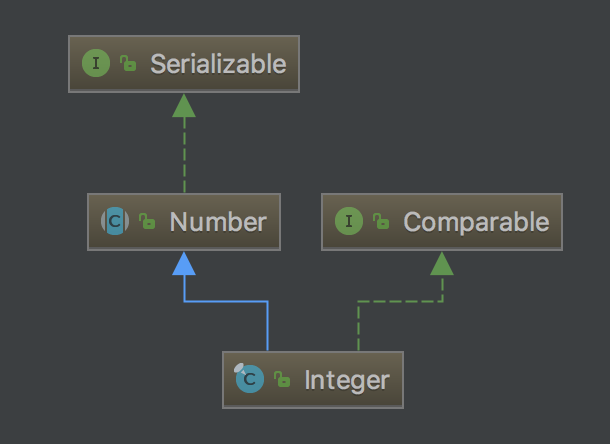
Integer是一个不变类,实现了Comparable接口。父类Number是个抽象类,是所有数字类型相关的类的父类,例如Double、Float、Integer、Long和Short。
取值范围
1 | /** |
可以看到,Integer类中规定了范围大小时在-2^31~2^31-1之间。
缓存策略
Integer的缓存策略是 Java 5 中引入的一个有助于节省内存、提高性能的特性。首先看一个使用 Integer 的示例代码,展示了 Integer 的缓存行为。接着我们将学习这种实现的原因和目的。
1 | public static void main(String[] args) { |
运行结果:1
2true
false
大多数人都认为上面的两个判断的结果都是false。虽然它们的值相等,但由于比较的是对象,而对象的引用不一样,所以会认为运行结果都是false。在 Java 中,== 比较的是对象引用,而 equals 比较的是值。因此,在这个例子中,不同的对象有不同的引用,所以在进行比较的时候都应该返回 false。原因如下:
源码中有一个IntegerCache,这一个私有的内部类。这个类缓存了low - high之间数字的包装类。关于这个类的分析在下面,反正你需要记住它把一些数字的包装类提前缓存了,如果判断成立就把缓存中的那个包装类返回,如果不则new一个新的。
IntegerCache源码
1 | private static class IntegerCache { |
Javadoc 详细的说明这个类是用来实现缓存支持,并支持 -128 到 127 之间的自动装箱过程。最大值 127 可以通过 JVM 的启动参数 -XX:AutoBoxCacheMax=size 修改。 缓存通过一个 for 循环实现。从小到大的创建尽可能多的整数并存储在一个名为 cache 的整数数组中。这个缓存会在 Integer 类第一次被使用的时候被初始化出来。以后,就可以使用缓存中包含的实例对象,而不是创建一个新的实例(在自动装箱的情况下)。
实际上在 Java 5 中引入这个特性的时候,范围是固定的 -128 至 +127。后来在 Java 6 中,最大值映射到 java.lang.Integer.IntegerCache.high,可以使用 JVM 的启动参数设置最大值。这使我们可以根据应用程序的实际情况灵活地调整来提高性能。是什么原因选择这个 -128 到 127 这个范围呢?因为这个范围的整数值是使用最广泛的。在程序中第一次使用 Integer 的时候也需要一定的额外时间来初始化这个缓存。
Java语言规范中的缓存行为
在 Boxing Conversion 部分的Java语言规范(JLS)规定如下:
如果一个变量 p 的值属于:-128至127之间的整数(§3.10.1),true 和 false的布尔值 (§3.10.3),’u0000′ 至 ‘u007f’ 之间的字符(§3.10.4)中时,将 p 包装成 a 和 b 两个对象时,可以直接使用 a == b 判断 a 和 b 的值是否相等。
其他缓存的对象
这种缓存行为不仅适用于Integer对象。我们针对所有整数类型的类都有类似的缓存机制。
有 ByteCache 用于缓存 Byte 对象
有 ShortCache 用于缓存 Short 对象
有 LongCache 用于缓存 Long 对象
有 CharacterCache 用于缓存 Character 对象
Byte,Short,Long 有固定范围: -128 到 127。对于 Character, 范围是 0 到 127。除了 Integer 可以通过参数改变范围外,其它的都不行。